


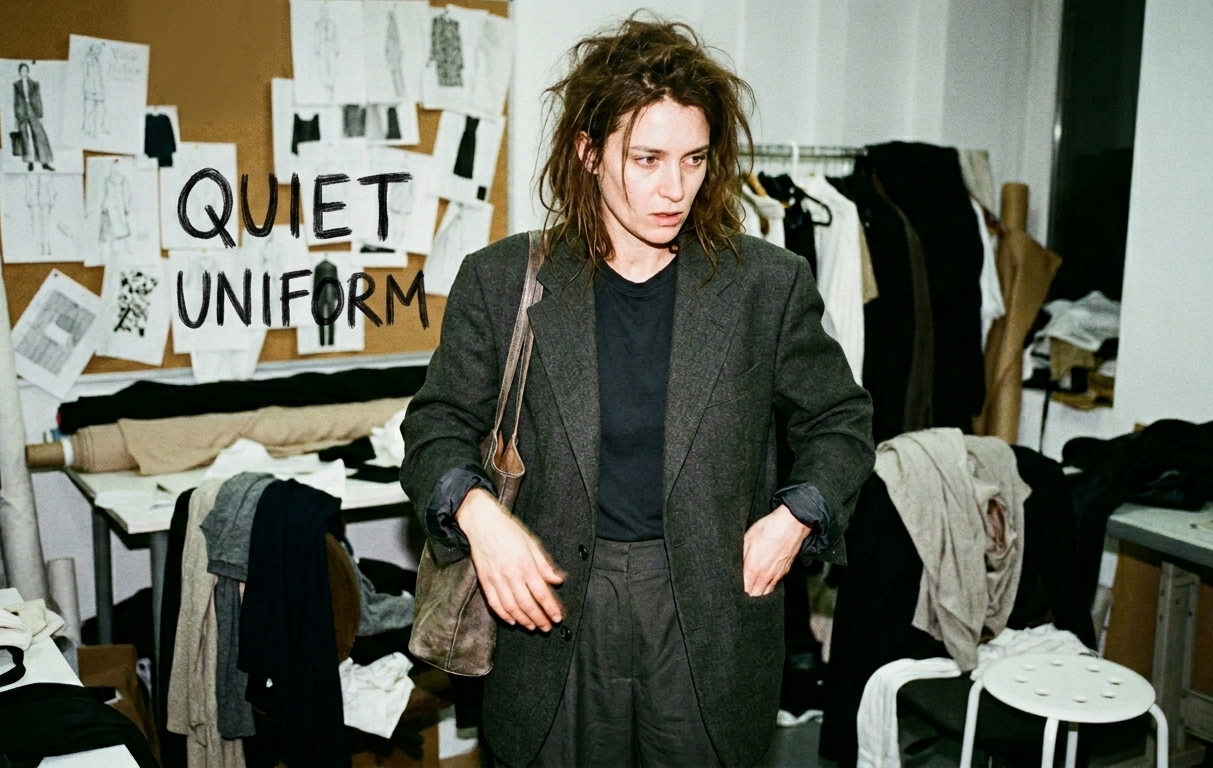
07 Apr The Quiet Uniform: How Fashion Learned to Whisper
2 min read
There was a moment somewhere between the mid-2010s peak of Supreme drops and the pandemic’s enforced reckoning with what clothes actually mean when the logo stopped working. Not the logo as identifier. The logo as announcement.
What replaced it wasn’t minimalism. Minimalism has politics, has intent, has a certain Danish furniture energy that was always more about aspiration than substance. What replaced the logo was something more specific: the quiet uniform. Clothes that cost more than a logo T-shirt ever could, but that communicate that cost exclusively to people already initiated into the language.
Loro Piana. Brunello Cucinelli. The Row. Khaite. These are not brands that advertise. They barely do runway shows in any conventional sense. Their customers do not need to be told what they are buying or why it matters. The price point does that work, and so does the handle of the cashmere, and so does the fact that your peers will recognise the cut without recognising the label.
This is the defining status move of the 2020s: dressing for a room where everyone already knows.
The irony is that it requires more knowledge, not less, to decode. A Supreme box logo is legible to anyone with an internet connection and fifteen minutes of cultural orientation. A Loro Piana Wish bag tells you nothing if you don’t already know what a Wish bag is. The barrier to entry isn’t price — it’s fluency.
Which makes the quiet uniform not a rejection of status dressing. It’s status dressing with the entry requirements raised.
The louder the world gets and it is getting louder, algorithmically, incessantly the more the truly wealthy retreat into clothes that refuse to participate. No tags. No campaigns. No collaborations with artists whose followers might come looking.
Fashion has always reflected power. Right now, power is wearing something you’ve never seen on Instagram.
No Comments