



09 Nov FDA Forces Labels to Warn of Eye Risk
4 min read
Confession in Small Print
The warning label is a confession etched in small print, revealing a hidden cost of weight-loss drugs. It is not a bold statement but a quiet admission, buried beneath the legalese of pharmaceutical disclosure. The FDA’s requirement to include the NAION warning is a formal acknowledgment of a risk that was once obscured, now made explicit for those who read it. This is not a concession, but a reckoning with the unintended consequences of these drugs.
The label does not promise transparency, but it does demand scrutiny. It is a document that shifts the burden of knowledge from the manufacturer to the patient, even if the latter is left to decipher the language. The warning is not a reassurance but a provocation—a reminder that every dose carries a potential consequence. The small print is not an afterthought but a deliberate act of disclosure, a way to make the risk tangible.
In this way, the label becomes a kind of artifact, a relic of the drug’s history. It marks a shift in the narrative, from efficacy to exposure. The warning is not a correction but a reclassification, turning the drug from a solution into a cautionary object. The cost of weight loss is no longer a secret—it is now written on the package, in ink that cannot be erased.

Weight of Vision Loss
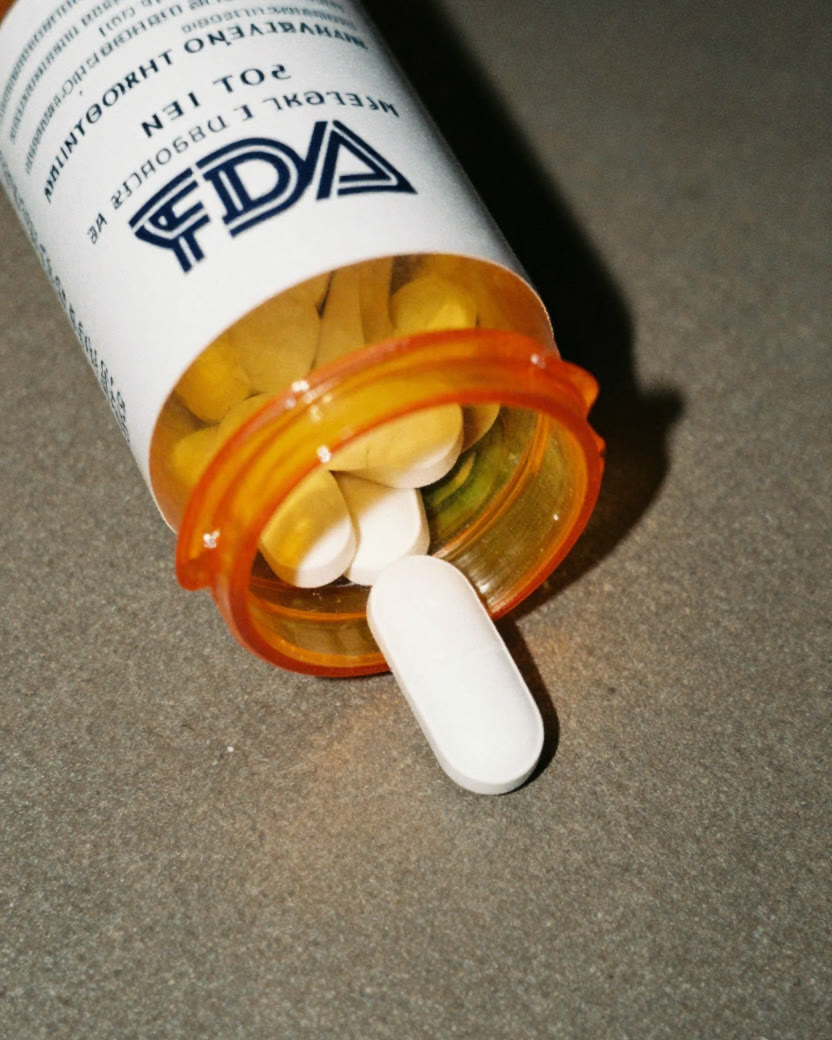
Each pill now carries the weight of a possible vision loss. The risk is no longer buried in clinical jargon but etched into the packaging, a silent ledger of consequence. The label is a marker, a quiet assertion that the drug’s purpose is not without cost. The eye condition, NAION, is not a footnote but a fact now inscribed on the bottle.
The risk is specific, not vague. It is the shoulder seam of the drug’s design, the unspoken trade-off in the equation of weight loss and health. The label does not sugarcoat the danger; it names it, and in doing so, it reframes the drug’s narrative. It is no longer just a tool for weight management—it is a risk-bearing artifact.
The weight of vision loss is a new metric for the drug’s value. It is not a concession but a recalibration of what is known and what is known to be possible. The label is not a warning in the traditional sense but a reckoning, a quiet shift in the language of medicine. The pill is no longer just a pill—it is a statement.
Recalibration, Not Concession
The label is a recalibration, not a concession. It does not apologize for the drug’s success, but repositions it within a broader calculus of risk. The FDA does not negate the efficacy of GLP-1 receptor agonists; it reframes their use, demanding a reckoning with the collateral damage. This is not a retreat but a realignment of priorities, placing consequence alongside cure.
The shift from efficacy to consequence is subtle but decisive. The label does not erase the drug’s function, but it complicates its narrative. A pill that once promised weight loss now carries the burden of a potential vision loss. The language of medicine becomes more precise, more guarded, more reflective. The drug’s purpose is not abandoned, but its legacy is now measured in more than just numbers on a scale.
This recalibration is a quiet act of accountability. It does not diminish the drug’s value, but it does not ignore its dangers either. The label is a testament to the evolving language of medicine—one that no longer takes efficacy for granted. It is a reminder that every treatment comes with its own set of costs, and that these must be acknowledged, not just in clinical trials, but in the very packaging that delivers the drug.

Reckoning with Cost
The warning is a quiet reckoning with the cost of weight loss, rewriting the drug’s legacy in the language of risk. The label does not merely inform—it redefines the drug’s purpose, shifting its narrative from a tool of transformation to a harbinger of consequence. The language of risk is not new, but its placement here is deliberate, etched into the packaging as a permanent reminder of what is traded for a slimmer silhouette. This is not a warning for the uninformed, but a reckoning for those who have already chosen the path. The pill’s form remains unchanged, but its meaning has shifted. The risk is no longer an afterthought—it is the defining feature of the drug’s identity. The label does not apologize; it asserts a new reality. The cost of weight loss is no longer abstract. It is now a condition, a medical event, a possible loss of vision. The drug’s legacy is no longer defined by its success, but by its failure. The warning is the final line, the last word, the weight that lingers after the pill is swallowed.
The edit starts now.
Source: businessoffashion.com
Sorry, the comment form is closed at this time.